
Pioneering the new standard of healthcare.
Pushing the boundaries of regenerative medicine through our line of media and proteins for Induced Pluripotent Stem Cell (iPSC) and Embryonic Stem Cell (ES).

About Regenerative Medicine Advancing innovative therapies through regenerative medicine.
Creating solutions for those revolutionizing healthcare.
We contribute to the development of this groundbreaking field through the StemFit™ product family, a range of cell culture media and proteins designed for the enhancement of expansion and differentiation of iPSC and ES cells.
Used in a variety of research and clinical applications worldwide, the StemFit™ family has been instrumental in contributing to the development of new therapies for those struggling with life-altering diseases and other health issues.
High-quality, animal-origin free, GMP formulations.
Our formulations are free from any human or animal-derived components, making them as safe as possible.
Invented by Nobel laureate Shinya Yamanaka, our StemFit™ product family creates the optimal condition for cell expansion and differentiation of iPSC and ES cells. We’re proud to say we are the de facto cell media standard in Japan for iPSC and ES cell culture.
Our advanced cell culture media and recombinant proteins are designed to enhance the differentiation of cells into cell types of all 3 germ layers (ectoderm, mesoderm, endoderm) through high-quality, low-cost growth factors.

Our Approach Custom Regenerative Medicine Solutions
A formulation for every application.
The Ajinomoto Group offers customized formulations for various applications, including a GMP-compliant media designed for long-term genetic stability and large-scale manufacturing in both powder and aqueous forms.

ICH Q7 Certified

Animal-Origin Free

Global Supply Chain

Increased Shelf Life
Our StemFit™ product family includes a variety of formulations tailored to meet the needs of different applications from research, to clinical, and beyond.
- Animal-origin free, defined medium for differentiation of human ES and iPS cells.
- Animal-origin free, defined medium for human pluripotent stem cell culture.
- Animal-origin free, defined medium for human pluripotent stem cell culture.
- A high-purity, animal-origin-free recombinant human basic fibroblast growth factor produced in Corynebacterium glutamicum.
- A recombinant, animal-origin-free protein designed to support hematopoietic stem cell expansion and differentiation.
- A high-quality recombinant, animal-origin-free protein optimized for epithelial and organ-specific stem cell differentiation.
- A recombinant protein used in mesodermal and endodermal differentiation protocols.
- A high-purity, animal-origin-free recombinant human basic fibroblast growth factor produced in Corynebacterium glutamicum
- A high-quality, animal-origin-free recombinant human Activin A designed for stem cell differentiation and regenerative medicine applications.
The Purpose of Regenerative Medicine
Regenerative medicine works to restore function to the body. As an overarching field, regenerative medicine uses three specific types of methodologies which include:
- Cell therapy: These are the living cells that are used to repair or replace tissue. For example, stem cell transplants used to treat blood cancer.
- Tissue engineering: This is the structure used to promote new cell growth into specific 3D shapes. A key example would be bioengineered skin grafts.
- Advanced biologics: These are chemical signals that inform the cells how to behave. Take platelet-rich plasma, for instance, which uses a patient’s own blood for concentrated growth and healing.
How Regenerative and Cell-Based Therapies Work
Instead of using chemicals and pharmaceuticals, regenerative and cell-based therapies use a patient’s own living tissue and cells to repair and restore health.
Following a four-step process, a patient’s cells are sourced, grown, trained, and then planted into the patient’s body where the repair is needed.
There are two main sources from which cells are harvested:
- Autologous: These are cells sourced from the patient themself, so their body is less likely to reject them.
- Allogeneic: These cells are harvested from a healthy donor and are ready for use immediately.
As with any medical treatment, regenerative and cell-based therapies face several challenges:
- Viability: Keeping the cells alive during transport from lab to hospital.
- Identity: Making certain they remain the right kind of cells and don’t accidentally transform into something else.
- Function: Ensuring that once introduced to the patient’s body, they perform their intended purpose.
The Drivers Behind Regenerative Medicine
For regenerative medicine to be successful, the cells need an ideal environment and strictly controlled processes.
Fuel: Media, Nutrients, and Metabolic Support
- “Media” is the precise nutrient formulation that supports cell growth, acting as a diet tailored to the specific needs of the cell.
- Amino acids are the building blocks of protein. Combined in balance with nutrients, these enable the cells to properly heal tissue.
- Using the same formulation each time ensures that the medicine is consistently produced from one batch to the next.
Medical Nutrition Therapy
Medical nutrition therapy (MNT) is a specialized treatment designed by a healthcare expert who creates a personalized eating plan for a patient to help manage a specific medical condition.
In the same way that nutrient-rich media connects patient nutrition with cellular-level support, nutrient-tailored MNT empowers cells to repair tissue. Common conditions MNT helps manage include:
- Diabetes: Balancing carbohydrates to control blood sugar.
- Heart disease: Decreasing salt intake and unhealthy fats to manage blood pressure and cholesterol.
- Kidney disease: Adjusting proteins and minerals in the diet to reduce the workload on the kidneys.
- Digestive disorders: Modifying food types and textures to reduce pain and inflammation.
- Weight management: Designing a specific diet to promote healthy weight loss or weight gain.
Standardizing the Cure: Process Control and Scalability
Expanding a cure from cultivating a few cells for one patient to growing enough cells to treat thousands of patients is a large engineering challenge that requires:
-
Transitioning from research scale to larger volumes involves giant bioreactors.
-
Managing variability and maintaining performance during the scaling process requires intense process stability.
-
Purity of raw materials and process stability ensures consistent efficacy of each batch.
Collaborate With Us Our Solutions Go Even Further
Don’t see what you’re looking for? We thrive on meeting modern challenges and changing consumer preferences with solutions. Our process is all about finding innovation in tradition and intersecting our expertise with today’s needs.
Collaborate with us and find out what else Ajinomoto Health & Nutrition North America, Inc. can do for you.
How We Innovate Helping to pioneer the cell therapy field.
Cell media solutions that can change lives.
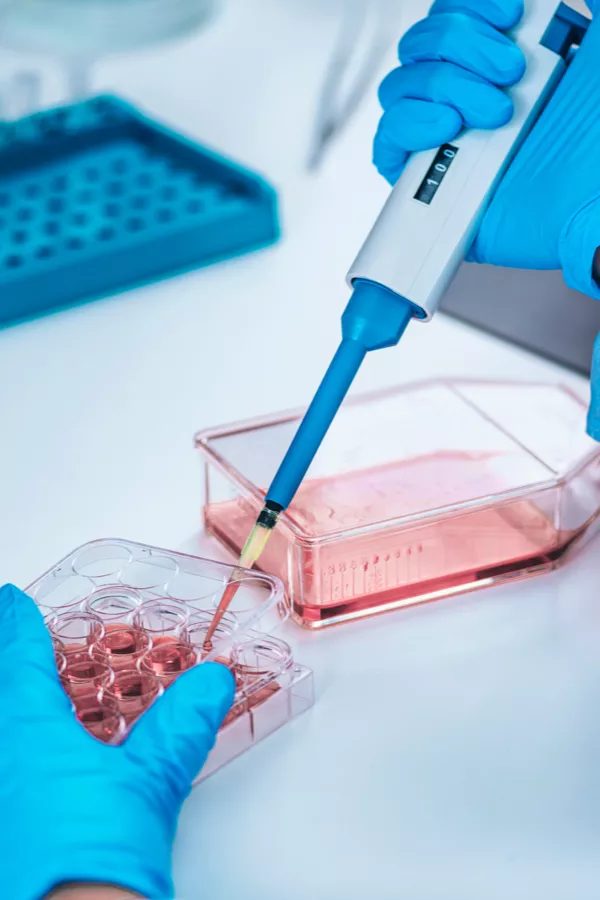
Our StemFit™ media solutions are a critical piece in cell therapy research, contributing to the study and development of therapies for those with significant health issues. Our media is being utilized in research to create therapies for those suffering from debilitating medical conditions and life-altering diseases.
Exploring Regenerative Medicine Applications
Explore the diverse fields of regenerative medicine to see how these cell-based approaches are utilized in real-world research and development.
Cell Therapy Development
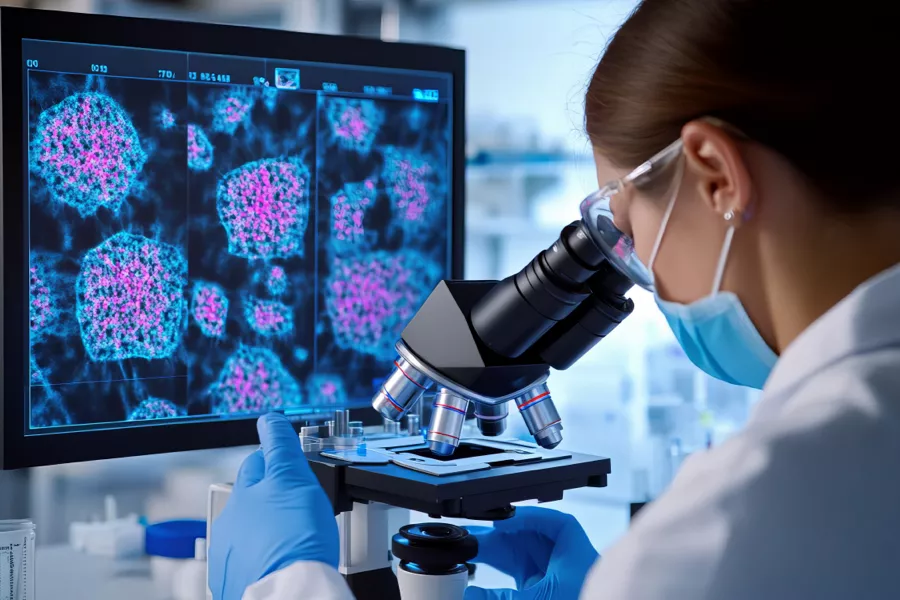
Cell therapies such as stem cell therapy, immune cell therapy, and more are effective for specific medical applications such as restoring cardiac function, skin regeneration, and treating macular degeneration. Discover how StemFitTM media is used to grow the high-quality cells needed for therapies.
Cell Culture Optimization
Optimizing cell culture conditions is essential for consistent experimental outcomes. This involves fine-tuning media formulations, balancing nutrients, and controlling the environment to ensure reliable cell growth, metabolism, and function across various scales and experiments.
Bioprocessing and Scale-Up
As regenerative medicine programs advance past initial research, scalability becomes a critical challenge. Bioprocessing is essential for ensuring consistent cell quality and uniformity as production volumes rise, all while adhering to strict operational and quality standards.
Research and Translational Applications
Bridging the gap between initial discovery and clinical use, early-stage research and translational studies demand reliable inputs and reproducible systems. This is essential for validating, repeating, and ultimately advancing findings.
Discover How Ajinomoto Health & Nutrition Can Transform Your Business
Get access to industry experts, better ingredients, and innovative solutions.